


In this article
Breathwork as a Path to Altered States
Breathwork has been practiced for centuries as a means of transformation, healing, and self-discovery. A new study published in Public Library of Science ONE now provides scientific evidence for how structured High Ventilation Breathwork (HVB) combined with music can reliably induce altered states of consciousness. Researchers found that breathwork does more than change subjective experience. It directly influences brain activity, blood flow, and autonomic responses, creating effects that mirror some of the most powerful aspects of psychedelic therapy.
Inside the Study
How Breathwork Was Tested
The research team conducted three separate experiments with experienced practitioners. Participants performed high ventilation breathwork while listening to carefully selected music. Sessions were carried out in three environments: remotely at home, in a laboratory with psychophysiological monitoring, and inside an MRI scanner. This design allowed researchers to observe not only the reported effects but also the physiological and neurological mechanisms behind it.
Reported Experiences
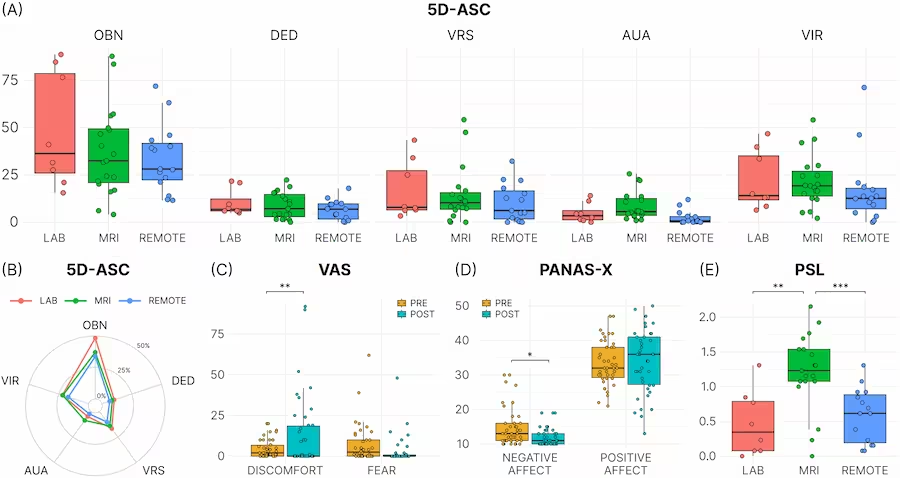
Across all conditions, participants reported significant altered states of consciousness. These included experiences of euphoria, bliss, perceptual shifts, and a sense of oceanic boundlessness often linked with psychedelics. Importantly, there were no reports of panic or severe negative reactions. The study shows that breathwork can reliably produce profound experiences in a safe and structured setting.
Key Neurological Shifts
MRI scans revealed that the intensity of altered states during breathwork was tied to specific changes in cerebral blood flow. Decreases in perfusion in the left posterior insula and operculum, regions linked to body awareness and interoception, predicted stronger altered state reports. At the same time, increases in perfusion in the right amygdala and anterior hippocampus, areas tied to emotional processing and memory, were associated with the most powerful subjective experiences.
These findings suggest that breathwork temporarily reconfigures brain networks, reducing ordinary self-referential processing while enhancing emotional memory pathways. This mechanism may help explain why often leads to feelings of unity, transcendence, and emotional release.
Autonomic Nervous System Changes
Physiological monitoring confirmed that breathwork produces strong autonomic responses. Heart rate variability indicated shifts toward sympathetic activation, consistent with the intense rhythmic breathing involved. These bodily changes not only accompanied but also predicted the depth of altered states, showing a direct link between intensity and subjective experience.
Emotional Outcomes
Participants reported decreases in negative emotions after breathwork sessions, suggesting potential therapeutic benefits. While some mild discomfort was noted from the demanding breathing technique, the overall emotional outcome was positive. This balance of intensity and relief highlights why is gaining attention as a safe tool for personal and clinical use.
Clinical Promise of Breathwork
The study emphasizes the therapeutic potential. By creating non-pharmacological pathways into altered states of consciousness, breathwork offers a legal, accessible, and safe alternative to psychedelic therapy. Mapping the neural correlates of these states provides a foundation for refining protocols that could support treatment of depression, trauma, and anxiety.
Limitations and Future Directions
While the findings are groundbreaking, the research has limits. The MRI sample was small, and all participants were experienced in practice. More studies with larger and more diverse groups, including novices, are needed to understand how widely these results apply. Control conditions separating the effects of music from breathing are also required.
Despite these limitations, the study provides the clearest picture yet of how breathwork works on the brain and body. It confirms that is not just a spiritual or wellness practice but a powerful intervention with measurable neurological and psychological effects.
Breathwork is rapidly moving from ancient traditions and wellness retreats into clinical research and therapy. This new study adds scientific weight to the practice, showing that can produce safe, replicable, and meaningful states of consciousness. With further investigation, could become a central tool in integrative medicine, bridging the worlds of neuroscience, psychology, and human transformation.