

In this article
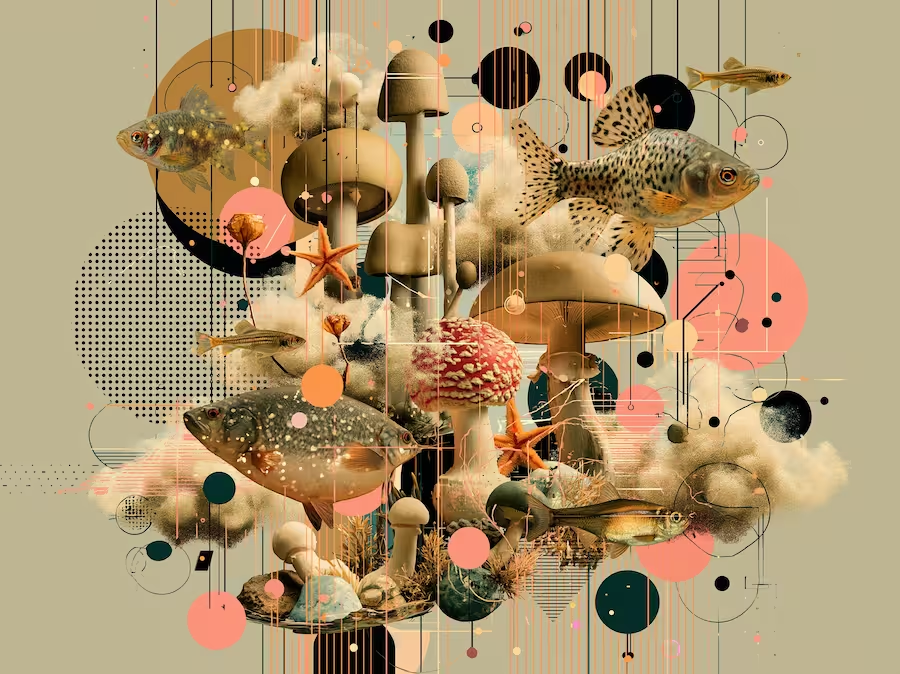
A groundbreaking study published in Frontiers in Behavioral Neuroscience reveals that psilocybin significantly reduces social aggression and overall activity in the mangrove rivulus fish. Researchers found that a single waterborne dose of the psychoactive compound led to a measurable decrease in aggressive swimming bursts and movement. This finding suggests that the therapeutic, calming properties of psilocybin are conserved across different species, providing new insights into its potential for treating social behavioral disorders in humans.
How Does Psilocybin Influence Social Behavior?
The research team, led by Dayna Forsyth and colleagues, investigated how low doses of psilocybin impact the interactions of the mangrove rivulus (Kryptolebias marmoratus). This specific fish is known for its naturally aggressive and socially dynamic nature. By exposing the fish to a waterborne treatment of 3,000 μg/L of psilocybin, the study observed a significant reduction in “swimming bursts,” which are primary indicators of aggressive behavior towards other fish.
The experiment utilized a dyadic pair model, where a focal fish was paired with a stimulus fish. In the control groups, activity levels typically increased during these social encounters. However, the fish treated with psilocybin remained notably calmer and displayed fewer aggressive tendencies. These results align with previous observations in other animal models, such as rodents, where psilocybin inhibited aggressive behaviors.
Why the Mangrove Rivulus is a Game-Changer for Neuroscience
The choice of the mangrove rivulus as a subject provides a unique advantage for behavioral research. As one of the few self-fertilizing hermaphroditic vertebrates, these fish produce offspring that are genetically identical, or isogenic. This allows scientists to isolate the effects of a drug like psilocybin from genetic variables.
In this study, the researchers observed that the behavioral changes occurred regardless of the specific genetic lineage of the fish. This suggests that the response to psilocybin is largely independent of genotype and instead points toward a fundamental neurological mechanism. Using such models helps researchers verify the depth and topical authority of pharmacological findings before they are translated to human clinical trials.
Understanding the Role of the 5-HT2A Receptor
Psilocybin functions as a prodrug that converts into psilocin within the body. Psilocin structurally resembles serotonin and interacts with serotonin receptors, specifically the 5-HT2A receptor. This receptor is critical for regulating mood, memory, and social emotions in both fish and humans.
The study contributes to a growing body of evidence that suggests psilocybin may mitigate physiological stress states by suppressing specific serotonergic neurons. While the half-life of the compound is relatively short, its behavioral effects appear to be long-lasting. This research provides a technical foundation for further exploring how these molecular pathways can be targeted to improve mental health outcomes.
Practical Implications for Future Research
The findings from this 2026 study underscore the importance of non-human models in evaluating the safety and efficacy of psychedelic compounds. By demonstrating a clear reduction in aggression without significant negative side effects, the research supports the continued exploration of psilocybin as a psychotherapeutic agent.
Key takeaways for the scientific community include:
- The confirmation of psilocybin’s sedative and anti-aggressive properties in adult vertebrate models.
- The utility of isogenic fish lineages in controlling for genetic variance in drug screening.
- The potential for translating these findings into treatments for human conditions that impair social behavior, such as anxiety and depression.
This research highlights a shift toward a more holistic understanding of how psychoactive substances interact with social environments and biological systems alike. As we move further into the era of advanced behavioral neuroscience, these insights will be vital for architecting the next generation of mental health therapies. 
Read the comprehensive research on The magic of mushrooms: psilocybin influences behavior in the mangrove rivulus fish, Kryptolebias marmoratus