

In this article
A year-long investigation published by Psymposia reveals how a small group of Silicon Valley elites sought to capture the psychedelic therapy industry, leveraging a network of affiliated organizations to scapegoat critics while, according to Psymposia, pressuring regulators to approve their deeply flawed MDMA clinical trials.
At the center of the controversy is the Psychedelic Science Funders Collaborative (PSFC), a network of wealthy donors and influential figures accused of shaping psychedelic policy, funding research ecosystems, influencing media narratives, and aggressively pushing MDMA-assisted therapy toward FDA approval despite mounting criticism surrounding clinical trial ethics and scientific rigor.
Many of the claims discussed in the report remain disputed, and several organizations named in the investigation have publicly defended their work and intentions.
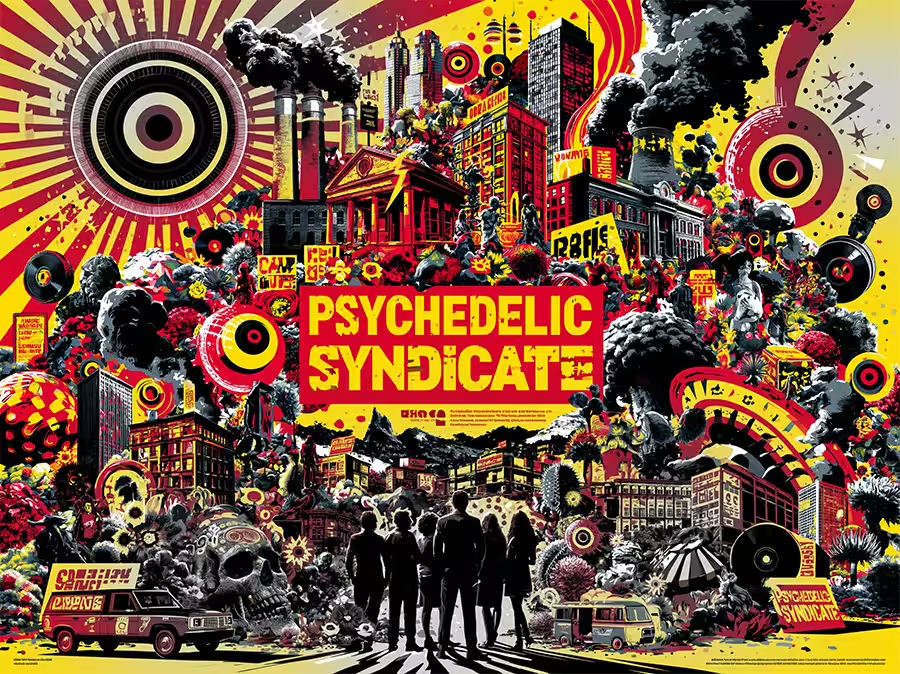
The report, titled The Psychedelic Syndicate: How Silicon Valley Used Veterans to Hijack the Psychedelic Industry, paints a picture of an industry fractured by ideological warfare. On one side are advocates who believe psychedelic medicine must scale rapidly to address the global mental health crisis. On the other hand are watchdogs, journalists, researchers, and activists warning that commercialization risks corrupting the transformative potential of psychedelics themselves.
What Is the “Psychedelic Syndicate” Report?
Published after what Psymposia describes as a year-long investigation involving internal emails, transcripts, presentations, and leaked documents, the report examines how psychedelic organizations allegedly became entangled with Silicon Valley-style venture strategies and political influence campaigns.
The investigation focuses heavily on the relationship between:
- Multidisciplinary Association for Psychedelic Studies (MAPS)
- Lykos Therapeutics
- The Psychedelic Science Funders Collaborative (PSFC)
- Veteran advocacy organizations
- Public relations firms
- FDA lobbying efforts
- State-level psychedelic legalization campaigns
According to the report, these groups worked together through funding, strategic coordination, communications efforts, and advocacy initiatives tied to the advancement of MDMA-assisted therapy.
The accusations are particularly significant because MDMA-assisted therapy for PTSD had been widely viewed as one of the most promising developments in psychiatric medicine. However, the FDA declined to approve Lykos Therapeutics’ application in 2024 following concerns about trial methodology, ethical oversight, and data integrity.
Why the FDA Decision Changed Everything
The FDA decision became a defining moment for the psychedelic sector.
For years, psychedelic investors, nonprofits, therapists, and advocacy groups had positioned MDMA-assisted therapy as the breakthrough that would legitimize the broader psychedelic industry. Many believed approval would trigger a domino effect leading to expanded legalization and wider medical acceptance of substances like psilocybin.
Instead, the FDA’s decision exposed deep divisions inside the movement.
Critics argued that the rush toward commercialization ignored serious safety and ethical concerns. Supporters countered that bureaucratic delays were preventing desperately needed treatments from reaching veterans and trauma survivors.
Psymposia claims that after the FDA setback, organizations connected to the psychedelic ecosystem intensified efforts to pressure regulators and shape public perception through coordinated messaging campaigns.
The report argues that veteran-focused advocacy became a powerful emotional and political messaging tool during the debate surrounding MDMA-assisted therapy and regulatory approval.
Silicon Valley’s Influence on Psychedelic Medicine
One of the report’s most controversial arguments is that Silicon Valley-style startup ideology increasingly reshaped parts of the psychedelic movement itself.
According to Psymposia, the “move fast and break things” mentality commonly associated with tech startups migrated into psychedelic medicine, prioritizing rapid scaling, media influence, and market dominance over careful scientific and ethical safeguards.
The report specifically examines alleged connections between psychedelic funding networks and wealthy technology investors linked to:
- Venture capital ecosystems
- Burning Man culture
- AI development
- Political lobbying
- Private equity expansion
Psymposia argues that psychedelic therapy became increasingly framed as a scalable biotech industry rather than a grassroots healing movement.
This broader shift reflects a growing tension visible across the entire psychedelic sector:
Should psychedelic medicine become a tightly regulated pharmaceutical industry dominated by investors and corporations, or remain rooted in decentralized community-based approaches?
That question now sits at the heart of the psychedelic debate worldwide.
The Role of MAPS and Lykos Therapeutics
For decades, MAPS served as one of the most recognizable organizations advocating psychedelic research and drug policy reform.
Founded by Rick Doblin, MAPS played a central role in bringing MDMA-assisted therapy into mainstream scientific discussion.
But as clinical trial costs increased and psychedelic investment accelerated, the organization’s former commercial subsidiary, MAPS PBC, later became Lykos Therapeutics, a for-profit pharmaceutical company pursuing FDA approval.
According to the investigation, this transition marked a major turning point where psychedelic activism increasingly intersected with venture-capital logic and pharmaceutical strategy.
Psymposia’s report also highlights allegations surrounding:
- Conflicts of interest
- Trial misconduct concerns
- Public relations coordination
- Media influence campaigns
- Pressure on critics and whistleblowers
Meanwhile, supporters of MDMA-assisted therapy argue that many criticisms are exaggerated or politically motivated and that delaying access harms patients suffering from severe PTSD.
Psychedelic Therapy and the Ethics Crisis
The controversy surrounding psychedelic therapy extends beyond corporate influence alone.
The report revisits longstanding concerns about therapist misconduct, power imbalances during altered states, underground psychedelic facilitation, and inadequate safeguards within psychedelic-assisted therapy models.
One widely discussed controversy involved allegations of misconduct connected to a MAPS-affiliated clinical trial, which later became central to criticism surrounding the FDA review process.
These ethical questions have become increasingly important as psychedelic therapy enters mainstream healthcare discussions.
Unlike conventional pharmaceuticals, psychedelic-assisted therapy often involves:
- Extended therapy sessions
- Deep emotional vulnerability
- Altered states of consciousness
- Physical therapeutic environments
- Intense patient-therapist relationships
Critics argue that these dynamics require unusually robust oversight and ethical standards.
Supporters counter that isolated incidents should not derail potentially revolutionary mental health treatments capable of helping millions suffering from trauma, depression, addiction, and end-of-life anxiety.
A Psychedelic Industry at a Crossroads
The “Psychedelic Syndicate” investigation arrives during a critical moment for psychedelic medicine globally.
Psilocybin legalization initiatives continue expanding in parts of the United States. Ketamine clinics operate internationally. Research into psychedelic-assisted therapy is accelerating at major universities. Investors continue pouring money into biotech startups focused on consciousness-altering compounds.
At the same time, skepticism is growing.
Questions surrounding corporate influence, exaggerated marketing claims, ethical failures, and scientific rigor are becoming increasingly difficult to ignore.
The psychedelic movement now appears split between competing visions of its future:
- Pharmaceuticalization versus decentralization
- Venture capital versus grassroots organizing
- Acceleration versus caution
- Medicalization versus spiritual or community-oriented use
Regardless of where one stands politically or ideologically, the Psymposia report has already intensified conversations about transparency, accountability, and power inside the psychedelic ecosystem.
Where the Story Continues
This article only scratches the surface of the massive investigation.
The full “Psychedelic Syndicate” series spans multiple chapters covering Silicon Valley funding networks, MAPS and Lykos Therapeutics, FDA politics, veteran advocacy campaigns, media strategy, underground therapy controversies, and the future of psychedelic medicine.
Readers who want to explore the complete investigation, source documents, and the full multi-part series can read it directly on Psymposia.