


In this article
- What is the lasting impact of a single psilocybin dose on the human brain?
- How did researchers sequence the psilocybin trial?
- What are the differences between low-dose and high-dose psilocybin effects?
- Pros and Cons of Psilocybin Therapy Models
- Does the subjective psychedelic experience matter for therapeutic outcomes?
- Can psilocybin repair damaged neural pathways?
- Frequently Asked Questions
What is the lasting impact of a single psilocybin dose on the human brain?
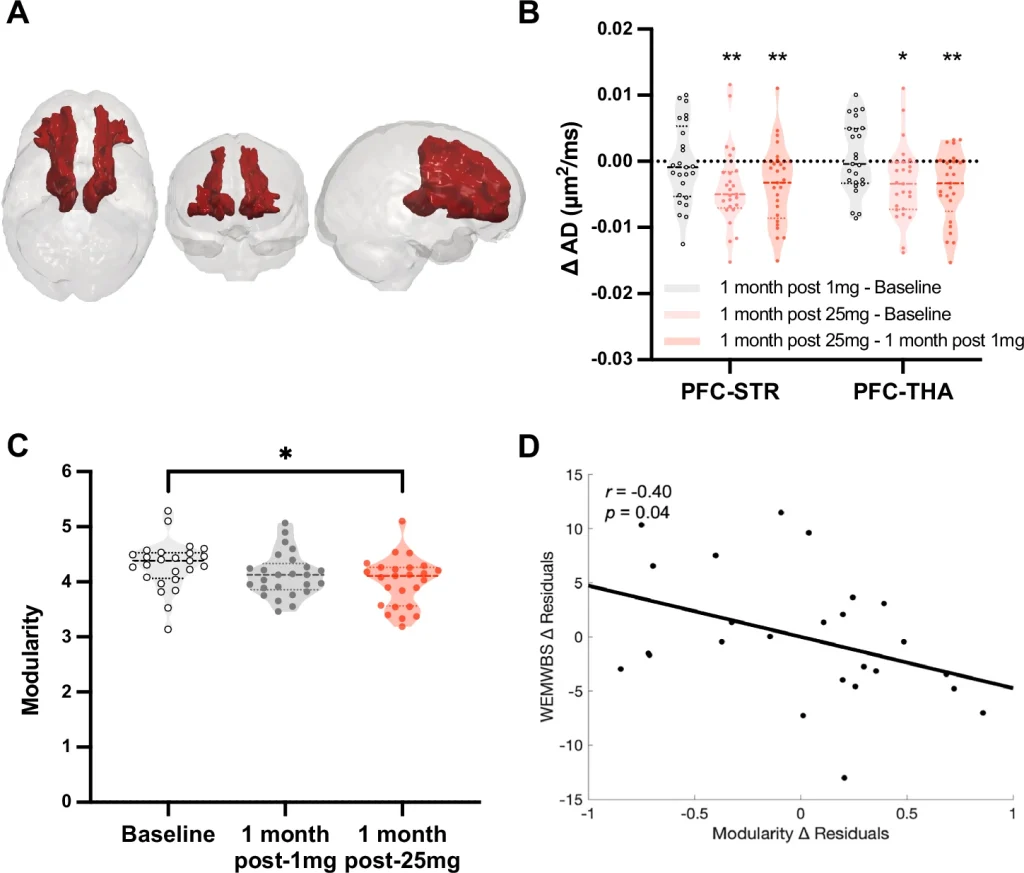
Psilocybin, the active psychedelic compound found in magic mushrooms, can induce long-term anatomical changes in human brain structure. A May 2026 study published in Nature Communications reveals that a single 25-milligram dose promotes increased neural tract density and robust connectivity lasting up to one month.
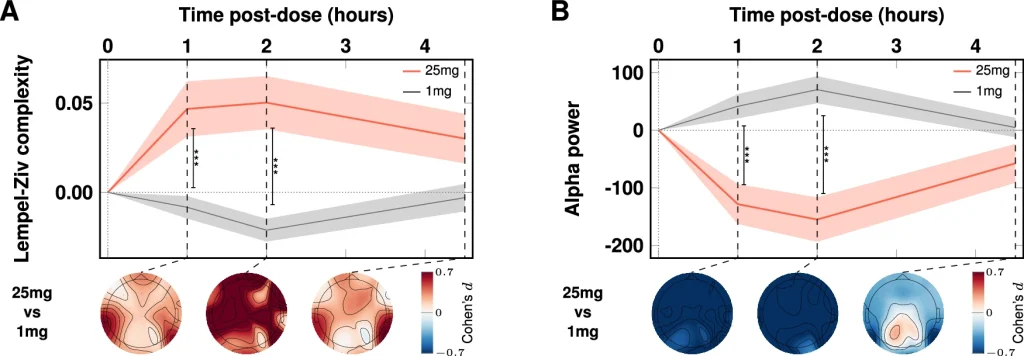
Researchers from the University of California, San Francisco, and Imperial College London established that a temporary surge in brain entropy during the psychedelic experience directly correlates with subsequent psychological insight. This entropic state allows users to fundamentally revise entrenched cognitive patterns and experience immediate, lasting improvements in mental well-being.
How did researchers sequence the psilocybin trial?
Scientists designed a rigorous clinical methodology using 28 healthy volunteers with absolutely no prior psychedelic exposure to isolate the drug’s biological impact.
- Baseline Assessment
- Input: Administration of a 1-milligram microdose of psilocybin (used as a functional placebo).
- Expected Output: Electroencephalography (EEG) and functional MRI capture standard resting-state neural activity without initiating a psychedelic trip.
- High-Dose Administration
- Input: Administration of a 25-milligram high dose of psilocybin one month after the baseline phase.
- Expected Output: Acute induction of a psychedelic state characterized by significant cognitive disruption and sensory alteration.
- Acute Phase Monitoring
- Input: Real-time EEG monitoring within 60 minutes of the high dose.
- Expected Output: Measurement of peak brain entropy, reflecting the sheer diversity of neural signals processed simultaneously.
- Longitudinal Structural Scanning
- Input: Diffusion Tensor Imaging (DTI) scans conducted four weeks post-dosing.
- Expected Output: Quantification of water diffusion along nerve bundles to measure actual physical changes in neural tract density.
What are the differences between low-dose and high-dose psilocybin effects?
| Parameter | 1 mg Dose (Placebo) | 25 mg Dose (Active) |
| Brain Entropy | Remains at baseline stability. | Spikes dramatically within 60 minutes. |
| Default Mode Network | Stays synchronized and rigidly intact. | Temporarily desynchronizes and scrambles. |
| Long-Term Structure | No physical neural tract changes. | Neural tracts become measurably denser. |
| Psychological Insight | Negligible cognitive shift reported. | Profound, lasting psychological insight. |
Pros and Cons of Psilocybin Therapy Models
Advantages
- Rapid Efficacy: A single session can trigger biological and psychological changes, bypassing the need for daily medication.
- Structural Neuroplasticity: The compound actively promotes the physical remodeling and strengthening of nerve fibers.
- Insight Generation: The subjective experience forces users to break out of rigid, entrenched thought loops common in depressive disorders.
Disadvantages
- Subjective Variability: The therapeutic benefit depends heavily on the patient achieving a specific entropic state.
- Temporary Disturbance: The intense desynchronization of the brain can cause severe acute distress during the clinical session.
- Durability Questions: It remains entirely unknown if the anatomical changes persist beyond one month without further maintenance doses.
Does the subjective psychedelic experience matter for therapeutic outcomes?
The clinical evidence confirms that the psychedelic trip itself is a mandatory component of the healing process. First author Dr. Taylor Lyons notes that the drug successfully loosens stereotyped brain activity. Patients who registered the highest spikes in brain entropy during the acute phase also reported the highest levels of mental well-being 30 days later. This proves the pharmacological action alone is insufficient. The subjective psychological insight acts as the mediating variable driving the actual anatomical restructuring.
Can psilocybin repair damaged neural pathways?
While the current research exclusively utilized healthy participants, the implications for clinical populations are substantial. Researchers observed that neural tracts became denser after the psilocybin dose. This anatomical shift is the exact opposite of what occurs during natural cognitive aging or chronic depressive episodes. By forcing the brain to process a richer body of information, the compound creates a temporary window for structural repair and cognitive revision. Future therapeutic models will likely personalize the exact dosage of the compound so clinicians can monitor real-time EEG readings to guarantee the patient reaches the necessary threshold of brain entropy.
Frequently Asked Questions
What is brain entropy in the context of psychedelic use?
Brain entropy measures the variability and unpredictability of neural activity. High entropy indicates the brain is processing a vast diversity of information and operating completely outside its normal, rigid patterns.
How long do the anatomical changes from psilocybin last?
The 2026 Nature Communications study confirmed that structural changes, including denser neural tracts, remain clearly visible on DTI scans for at least one month after a single 25-milligram dose.
Why did researchers use healthy volunteers for this psychedelic study?
Using 28 healthy individuals allowed scientists to map the precise biological impact of the drug without the confounding variables of pre-existing mental health conditions or prior psychedelic drug use.
What is the role of the default mode network during a trip?
The default mode network manages introspective thinking and ego. Psilocybin temporarily scrambles this network, creating the acute psychedelic state and paving the way for increased mental flexibility once the network re-establishes itself. 
Read The Full Study in this link