

For decades, LSD has existed in a strange limbo. Revered as a catalyst for personal insight, creativity, and spiritual exploration, it has simultaneously been dismissed by mainstream medicine as too unpredictable or too controversial to take seriously. That narrative is now starting to crack. A new large-scale clinical cohort from Geneva, Switzerland, provides some of the clearest real-world evidence yet that LSD, when used responsibly within psychotherapy, can offer meaningful relief for people suffering from severe and treatment-resistant mental health conditions.
Unlike tightly controlled laboratory trials, this study examined psychedelic-assisted psychotherapy as it is actually practiced in a hospital setting. Conducted under Switzerland’s compassionate use framework, clinicians at Les Hôpitaux Universitaires de Genève (HUG) treated patients who had not responded to conventional antidepressants or talk therapy. The results are difficult to ignore.
LSD assisted psychotherapy
More than one hundred patients with chronic depression and anxiety disorders participated in the program. Each underwent structured preparation sessions, a supervised psychedelic experience, and integration therapy afterward. Some received psilocybin, while others were treated with LSD at a standardized dose. The focus was not on recreational effects, but on psychological healing within a medical and ethical framework.
Patients who received LSD assisted psychotherapy showed significant reductions in both depressive symptoms and long-standing anxiety. These improvements were not subtle. Standardized clinical measures recorded meaningful changes within one to three months after treatment. Importantly, these outcomes occurred in people who had often struggled for years without success using standard psychiatric tools.
What makes the findings particularly compelling is that LSD performed on par with psilocybin, a substance that currently dominates public and scientific attention. Despite differences in duration and subjective intensity, LSD produced comparable therapeutic outcomes. This challenges the idea that LSD is somehow less suitable or more problematic than other classic psychedelics in clinical contexts.
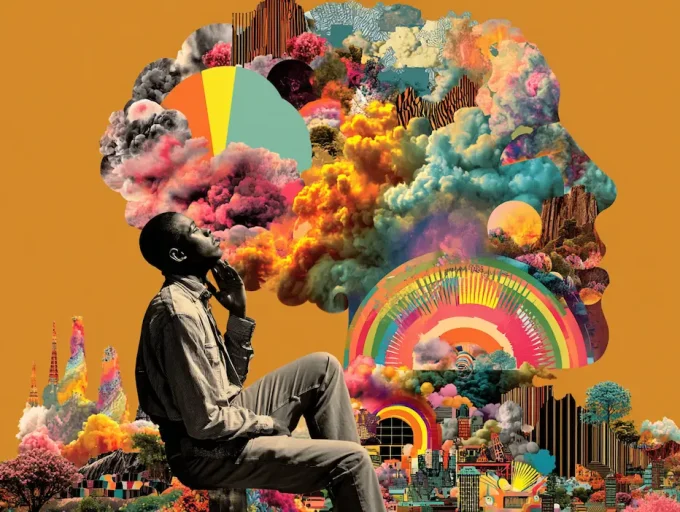
Beyond symptom reduction, the study explored changes in how patients relate to their thoughts and emotions. After LSD assisted psychotherapy, many participants showed reduced tendencies toward rumination, self-blame, and catastrophic thinking. At the same time, they demonstrated improved cognitive flexibility and an increased ability to reframe difficult experiences. These shifts matter because they suggest LSD does more than suppress symptoms. It appears to help people change the mental habits that sustain suffering.
Safety is often raised as the primary objection whenever LSD enters the medical conversation. Here again, the real-world data tells a different story. Adverse effects were generally mild and short-lived. Transient anxiety, emotional intensity, or physical discomfort occurred in some cases, but no serious medical complications were reported. No patients required hospitalization, and no long-term harm was observed within the follow-up period.
This safety profile is not accidental. LSD was administered in a controlled environment with trained therapists present throughout the experience. Preparation and integration were treated as essential components rather than optional extras. The study reinforces a point that psychedelic researchers have emphasized for years: context matters. LSD in a clinical setting is not the same as LSD taken without support or intention.
The implications of this research extend far beyond Switzerland. Mental health systems across the world are struggling with rising rates of depression, anxiety, and burnout. Conventional pharmacology often fails to address these conditions adequately, especially in their chronic forms. LSD assisted psychotherapy offers a fundamentally different approach, one that prioritizes insight, emotional processing, and psychological integration rather than daily symptom management.
This does not mean LSD is a universal solution or a replacement for existing treatments. It requires careful screening, professional oversight, and a legal framework that prioritizes patient safety. But the Geneva cohort demonstrates that LSD can be responsibly integrated into modern psychiatry when those conditions are met.
Conclusion
For years, conversations about LSD have been shaped more by fear and mythology than by evidence. This study adds substantial weight to a growing body of research suggesting that those fears are outdated. LSD is not a relic of the past or a reckless experiment. In the right hands, it is a powerful therapeutic tool with the potential to help people who have exhausted other options.
As psychedelic medicine continues to mature, real-world data like this may prove more influential than any single laboratory trial. It shows what is possible when science, policy, and clinical care align. LSD is no longer knocking at the door of mainstream medicine.
It’s already inside.