

In this article
Just when you thought the psychedelic landscape couldn’t get more fascinating, Mother Nature (with a little help from some dedicated scientists) has dropped two new bombshells. That’s right! Two brand-new species of psilocybin mushrooms have been identified in Southern Africa, reminding us that there are always more secrets to uncover.
The Big News: Meet Psilocybe ingeli & Psilocybe maluti
The world of mycology is buzzing with the formal announcement of two previously unknown psychoactive mushrooms. Hailing from the diverse ecosystems of Southern Africa, these newcomers, named Psilocybe ingeli and Psilocybe maluti, bring Africa’s count of known indigenous magic mushrooms to a grand total of six. It makes you wonder what other fungal secrets are still hiding right under our noses.
These fungi were found calling some beautiful places home. Psilocybe ingeli was discovered in South Africa’s biodiverse KwaZulu-Natal province. Psilocybe maluti was found across South Africa’s Free State province and into the Kingdom of Lesotho, named in honor of the mighty Maluti Mountains it inhabits.
Crucially, this wasn’t just a win for academics in lab coats. A huge shout-out goes to the citizen scientists, Talan Moult and Daniella Mulder. Their passion and sharp eyes were essential in first spotting and collecting these specimens. It’s a powerful reminder that curiosity and a love for the natural world can lead to major scientific breakthroughs, no degree required.
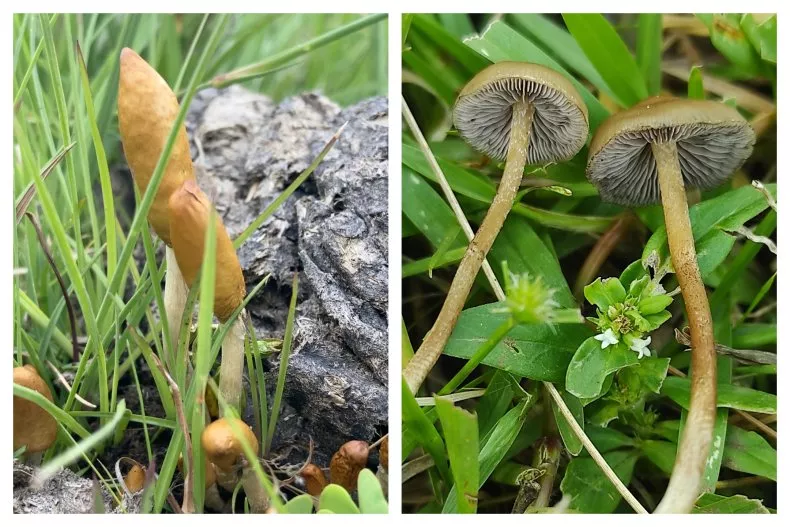
And for a fascinating twist? Both species were found growing in cow manure and dung-enriched soil. Who knew the key to finding new consciousness-altering fungi was lying in a humble cow pasture? It’s a pretty cool example of nature’s cycles, where decay gives rise to something profound.
If you’re wondering how to tell them apart, P. ingeli has a classic, dome-like cap with exposed gills. P. maluti is a bit more bulb-shaped. Both, of course, are members of the famed Psilocybe genus, known for producing the psilocybin that opens the doors of perception.
A Connection to the Past: Ancient Roots, New Finds
One of the most incredible parts of this story is the deep history of Psilocybe maluti. This wasn’t just a discovery; it was a re-discovery. The mushroom already has an indigenous name, “koae-ea-lekhoaba,” and is actively used by traditional Basotho healers to induce trance states for spiritual and healing purposes.
This connection highlights Africa’s unique and often overlooked psychedelic heritage. In fact, P. maluti is now the only psychedelic mushroom with documented traditional use in African medicine. This fact speaks volumes about the sophisticated botanical wisdom cultivated by these communities, including its use in recipes like a psychedelic tea steeped with another hallucinogenic plant, Boophone disticha.
This discovery reinforces that psilocybin use isn’t a modern trend but an ancient, global human practice. From the well-known ceremonies of the Mazatec people in Mexico to these traditions in Southern Africa, it’s clear that humans have been forming relationships with these fungal allies for millennia.
The Modern Trip: Why Everyone’s Talking About Psilocybin
This discovery couldn’t be more timely. Psilocybin is experiencing a massive comeback, moving from a counter-culture footnote to a subject of serious scientific and public interest. Researchers are exploring its therapeutic potential, while everyday people are seeking it for personal growth. June 2025 saw an explosion in patent fillings for psychedelics. For mycologists, professional and amateur alike, these new African species are a massive win, expanding our knowledge of fungal biodiversity and the distribution of psychoactive species worldwide.
Walking a Fine Line: The Psilocybin Predicament
Despite the global buzz, the legal status of psilocybin remains complicated. It’s a Schedule I drug under U.S. federal law, meaning it’s considered to have no accepted medical use—a stance that clashes sharply with the growing body of research. While states like Oregon and Colorado are moving toward decriminalization and regulated use, the federal ban creates a confusing and uncertain legal landscape.
Beyond the legal risks, there are practical dangers. Foraging for wild mushrooms without expert knowledge is incredibly risky. It’s dangerously easy to mistake a psychoactive mushroom for a deadly poisonous look-alike. Please, don’t take the risk unless you are 100% certain and guided by an expert.
And while psilocybin can be profoundly healing, it’s not without psychological risks. A “bad trip” can involve intense anxiety and paranoia. In rare cases, some individuals may experience lingering visual disturbances known as HPPD. Responsible use, careful preparation, and a supportive setting are essential.
Finally, as psilocybin goes mainstream, critical ethical questions are surfacing. As companies move to patent and profit from psilocybin therapies, there are valid concerns about cultural appropriation and ensuring that the indigenous communities who stewarded these medicines for centuries aren’t left behind.
The Psychedelic Future: What’s Next?
The future of psilocybin in medicine looks incredibly bright. Research is booming, with studies exploring its potential to treat depression, anxiety, PTSD, addiction, and even the brain fog associated with long COVID. Institutions like Johns Hopkins are leading the charge, and the FDA has granted psilocybin “Breakthrough Therapy” status for depression, fast-tracking its path to approval.
Scientists are also getting closer to understanding how it works, focusing on its ability to stimulate serotonin receptors and promote neuroplasticity—literally helping the brain “rewire” itself to break out of harmful patterns.
Even more startling, recent research suggests psilocybin’s active metabolite, psilocin, might have properties that can delay cellular aging. This opens up an entirely new frontier, hinting at benefits that go far beyond mental health.
The Journey Continues…
From a cow pasture in Southern Africa to the world’s most advanced research labs, the story of psilocybin is a powerful reminder of nature’s capacity to surprise and heal. These new discoveries deepen our scientific knowledge and our appreciation for ancient wisdom. As the psychedelic renaissance continues to unfold, one thing is certain: the future of fungi is looking brighter and more transformative than ever.